Baby Carriers and Child Carriers
Vaude child carriers and accessories including the Swing IV, Jolly Comfort, Jolly light, sun and rain covers
A range of child carriers and accessories from Bush Baby, including the Lite, Premier and Elite
About our Baby Carriers and Child Carriers:
Why do you want a baby carrier?
You already have a house full of kit for your child so why do you want a baby carrier? The best advantage of carrying your baby on your back is simply the freedom it provides. You can operate with both hands free, go for walks without stiles or sand being a major undertaking and your child should love being up at the same height as you, seeing things at your level and feeling part of the gang.
There are many choices of baby carrier, to help you choose the right one for your family we’ve put together top tips for buying and fitting baby carriers:
How soon can I use a baby carrier?
Your child should be able to sit up by themselves comfortably before you start using a baby carrier. This is usually around six months of age. If your child hasn’t yet developed the muscle strength to sit up it is really too early to use a rear child carrier and instead keep them in a front baby carrier for a few more weeks.
Is the weight of the baby carrier important?
Remember when you are buying a child carrier you are likely to be using it from when your child can sit up by themselves comfortably until they are around 3 years of age. If we assume they are an average sized baby you are looking at a weight gain during this 2 ½ year period of well over a stone. So depending on how strong you are the weight of the child carrier can be very relevant!
How well ventilated are the baby carriers?
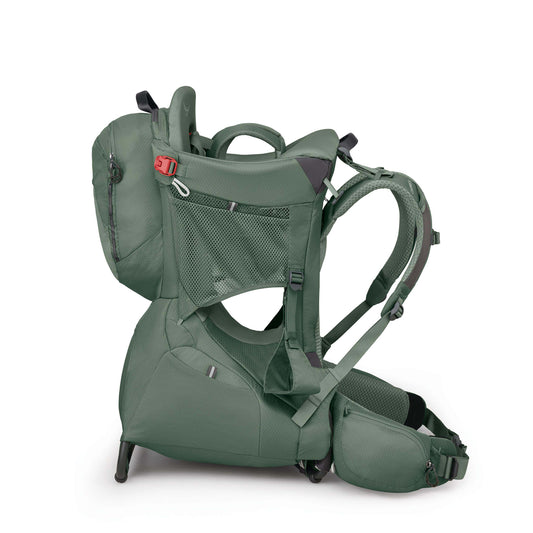
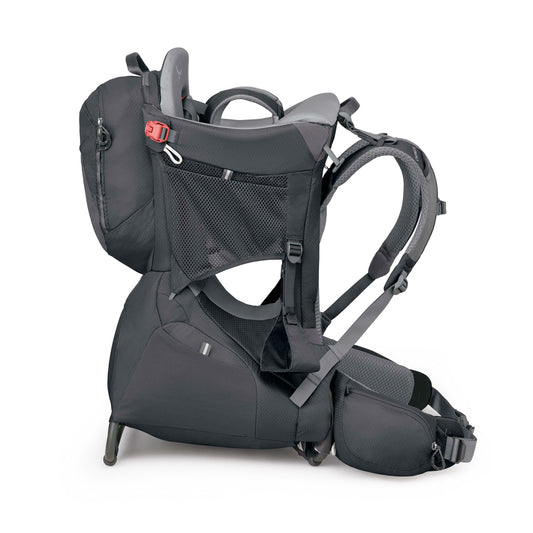
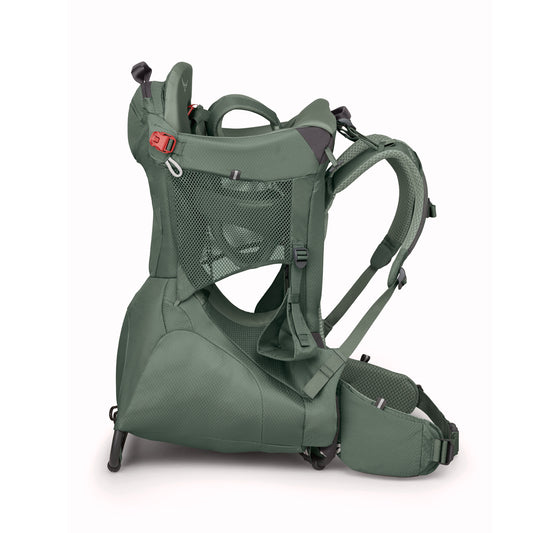
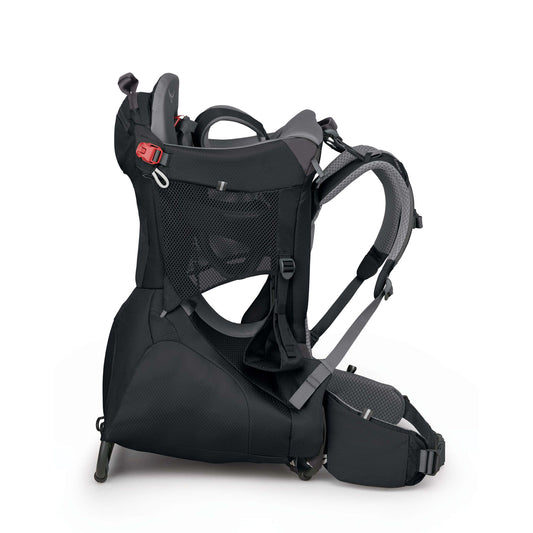
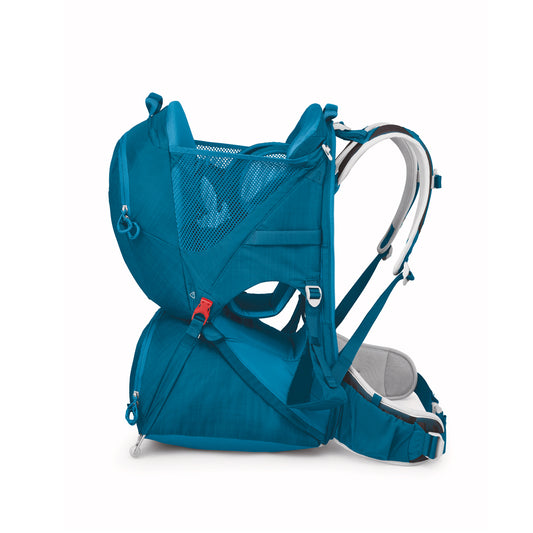
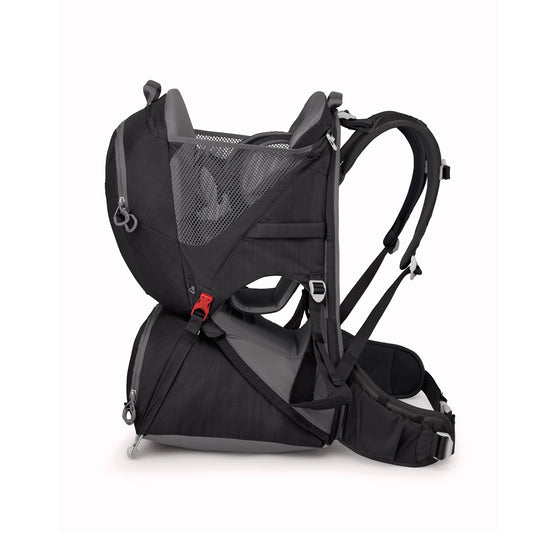
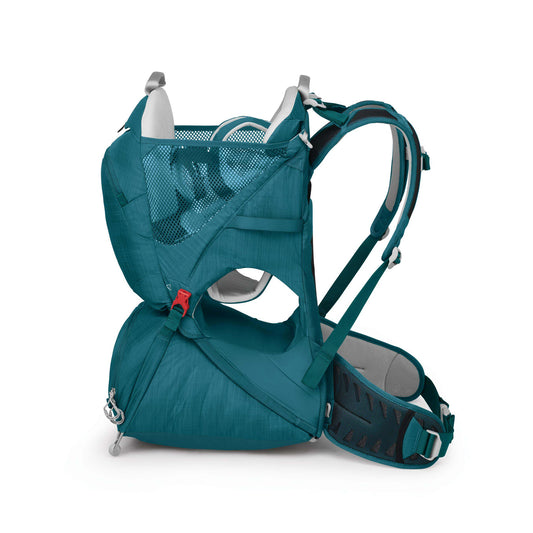
Once you have carried your child around in a baby carrier for an hour or so, chances are you’ll be nicely warm and probably have a river running down your back! Look for a baby carrier that is designed to sit slightly away from your back. If you plan to use it primarily on holiday in a hot country look for a carrier with a mesh back so it will allow maximum ventilation between you and your child.
How much storage space is there in a baby carrier?
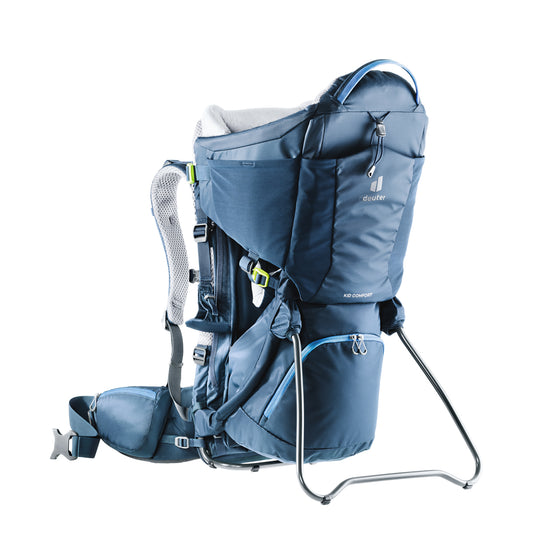
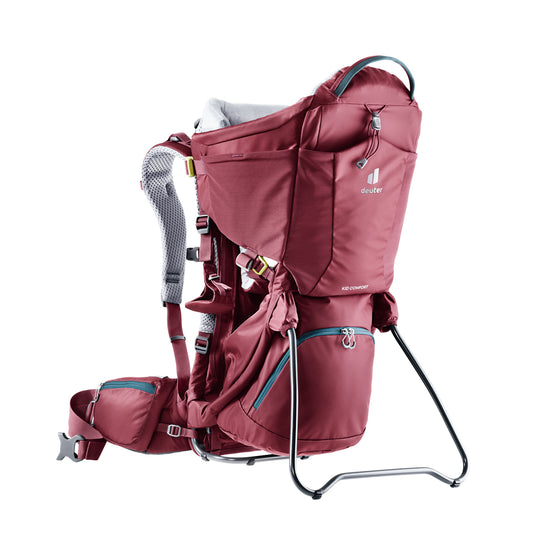
Most child carriers have a large zip pocket under the seat. You want this space to be large enough to accommodate at least your rain/sun canopy, nappies, waterproofs, drinks and snacks. The baby carriers with the pop out stand tend to have larger under seat storage. But as is always the case the bigger the bag the more unnecessary stuff you will end up carrying, so you don’t need a vast storage compartment unless you have planned some serious trekking.
How adjustable are they?
If more than one adult is going to be using the baby carrier make sure the range of the shoulder straps and hip belt reach is sufficient to fit everyone. Also ensure that the child’s seat position and straps are adjustable. Your child’s eye height should be level or slightly above yours, but they shouldn’t be able to see over your head.
How comfortable are the baby carriers?
As a rule of thumb the more expensive the carrier the more comfort features you'll find, like adjustable height shoulder straps, swivel hip straps, moulded hip fins (the part of the waist belt which sits on your hips). Whether you need these or not will depend on your budget and how much walking you intent to do. If you are keen or regular walker it is worth investing in one of the higher end baby carriers. But remember that much of the baby carrier comfort will be dependent on the way you have set it up for yourself. Make sure the hip belt fit is tight so you take the majority of the weight through your hips and not your shoulders. Pull the carrier towards you (straps at the back of the shoulder strap) as much as possible without toppling your child forward too much as this will help keep the weight close to your natural centre of gravity. Make sure you drop the seat height down as your child grows taller, again to maintain your natural centre of gravity.
Which baby carrier accessories do I need?
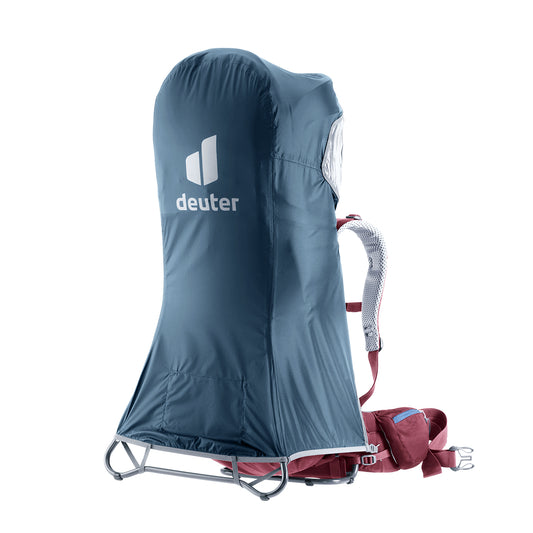
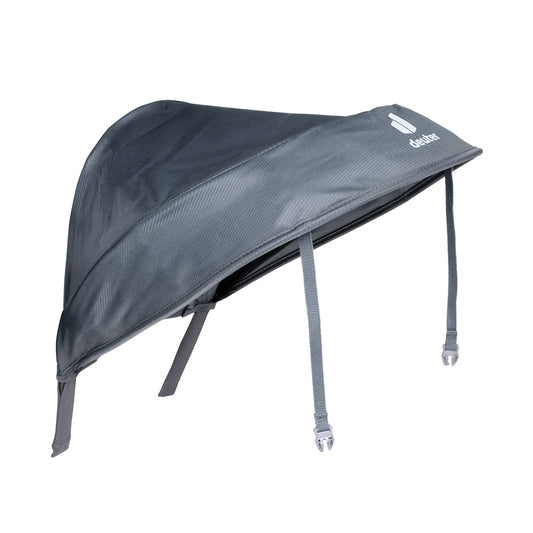
The only real must have accessory for all baby carrers is a sun/rain canopy. Some include them in the price and others are sold as a separate accessory. The sun canopy attaches to the top of the carrier and then a rain hood which you put over the top when you need it. The sun canopy is really useful especially if just the two of you are out because you won’t be able to easily see if your little one deposited their sun hat in a field half an hour ago.
What else can you tell me about baby carriers?
Remember that whilst you are working away climbing up a hill, your passenger will be sitting in the back and maybe exposed to a reasonable breeze and cooling down. Dress your child appropriately as they won’t be as warm as you are. Use layers, usual clothes then fleece jumper and trousers and an all in one windproof/waterproof suit if required. Also if your baby carrier has a pop out stand don’t rely on the stand to hold the carrier upright unsupported, a few wriggles and your baby will wobble it over!
Why do you want a baby carrier?
You already have a house full of kit for your child so why do you want a baby carrier? The best advantage of carrying your baby on your back is simply the freedom it provides. You can operate with both hands free, go for walks without stiles or sand being a major undertaking and your child should love being up at the same height as you, seeing things at your level and feeling part of the gang.
There are many choices of baby carrier, to help you choose the right one for your family we’ve put together top tips for buying and fitting baby carriers:
How soon can I use a baby carrier?
Your child should be able to sit up by themselves comfortably before you start using a baby carrier. This is usually around six months of age. If your child hasn’t yet developed the muscle strength to sit up it is really too early to use a rear child carrier and instead keep them in a front baby carrier for a few more weeks.
Is the weight of the baby carrier important?
Remember when you are buying a child carrier you are likely to be using it from when your child can sit up by themselves comfortably until they are around 3 years of age. If we assume they are an average sized baby you are looking at a weight gain during this 2 ½ year period of well over a stone. So depending on how strong you are the weight of the child carrier can be very relevant!
How well ventilated are the baby carriers?
Once you have carried your child around in a baby carrier for an hour or so, chances are you’ll be nicely warm and probably have a river running down your back! Look for a baby carrier that is designed to sit slightly away from your back. If you plan to use it primarily on holiday in a hot country look for a carrier with a mesh back so it will allow maximum ventilation between you and your child.
How much storage space is there in a baby carrier?
Most child carriers have a large zip pocket under the seat. You want this space to be large enough to accommodate at least your rain/sun canopy, nappies, waterproofs, drinks and snacks. The baby carriers with the pop out stand tend to have larger under seat storage. But as is always the case the bigger the bag the more unnecessary stuff you will end up carrying, so you don’t need a vast storage compartment unless you have planned some serious trekking.
How adjustable are they?
If more than one adult is going to be using the baby carrier make sure the range of the shoulder straps and hip belt reach is sufficient to fit everyone. Also ensure that the child’s seat position and straps are adjustable. Your child’s eye height should be level or slightly above yours, but they shouldn’t be able to see over your head.
How comfortable are the baby carriers?
As a rule of thumb the more expensive the carrier the more comfort features you'll find, like adjustable height shoulder straps, swivel hip straps, moulded hip fins (the part of the waist belt which sits on your hips). Whether you need these or not will depend on your budget and how much walking you intent to do. If you are keen or regular walker it is worth investing in one of the higher end baby carriers. But remember that much of the baby carrier comfort will be dependent on the way you have set it up for yourself. Make sure the hip belt fit is tight so you take the majority of the weight through your hips and not your shoulders. Pull the carrier towards you (straps at the back of the shoulder strap) as much as possible without toppling your child forward too much as this will help keep the weight close to your natural centre of gravity. Make sure you drop the seat height down as your child grows taller, again to maintain your natural centre of gravity.
Which baby carrier accessories do I need?
The only real must have accessory for all baby carrers is a sun/rain canopy. Some include them in the price and others are sold as a separate accessory. The sun canopy attaches to the top of the carrier and then a rain hood which you put over the top when you need it. The sun canopy is really useful especially if just the two of you are out because you won’t be able to easily see if your little one deposited their sun hat in a field half an hour ago.
What else can you tell me about baby carriers?
Remember that whilst you are working away climbing up a hill, your passenger will be sitting in the back and maybe exposed to a reasonable breeze and cooling down. Dress your child appropriately as they won’t be as warm as you are. Use layers, usual clothes then fleece jumper and trousers and an all in one windproof/waterproof suit if required. Also if your baby carrier has a pop out stand don’t rely on the stand to hold the carrier upright unsupported, a few wriggles and your baby will wobble it over!